
Google Tag Manager: The Most Powerful Tool Most Marketers Don’t Actually Understand

Most marketers install Google Tag Manager.
Very few actually use it properly.
And that is a problem, because GTM is not just another tool.
It is the foundation of your entire tracking and data system.
The Real Problem: Broken Tracking Everywhere
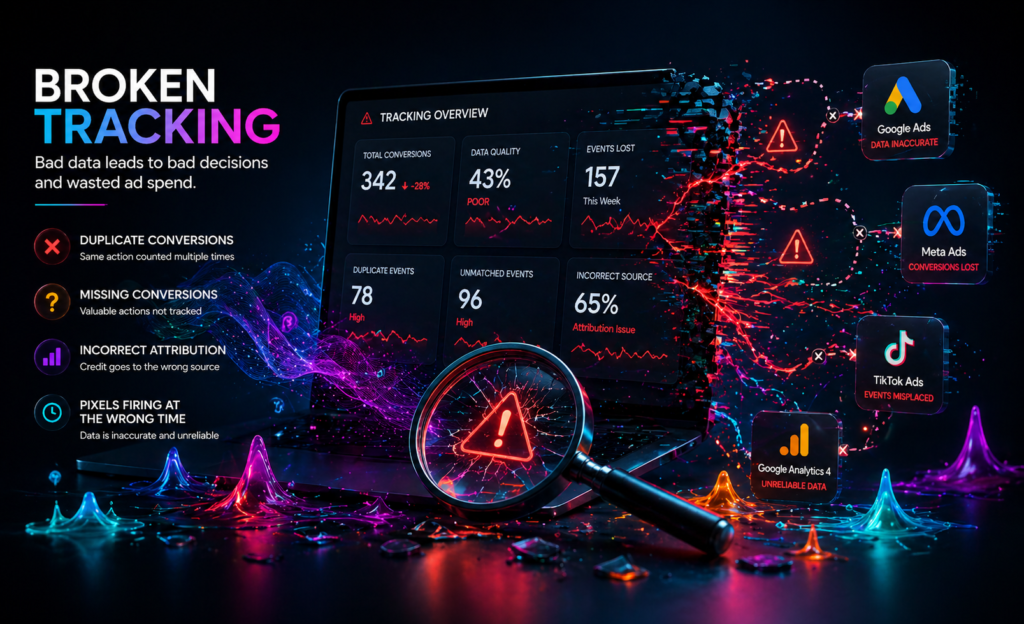
Most ad accounts today are being optimised on bad data.
- Duplicate conversions
- Missing conversions
- Incorrect attribution
- Pixels firing at the wrong time
You scale what looks like a winner and kill what might actually be working.
Without proper tracking, every decision becomes a guess. And guessing at scale gets expensive fast.
What Google Tag Manager Actually Does
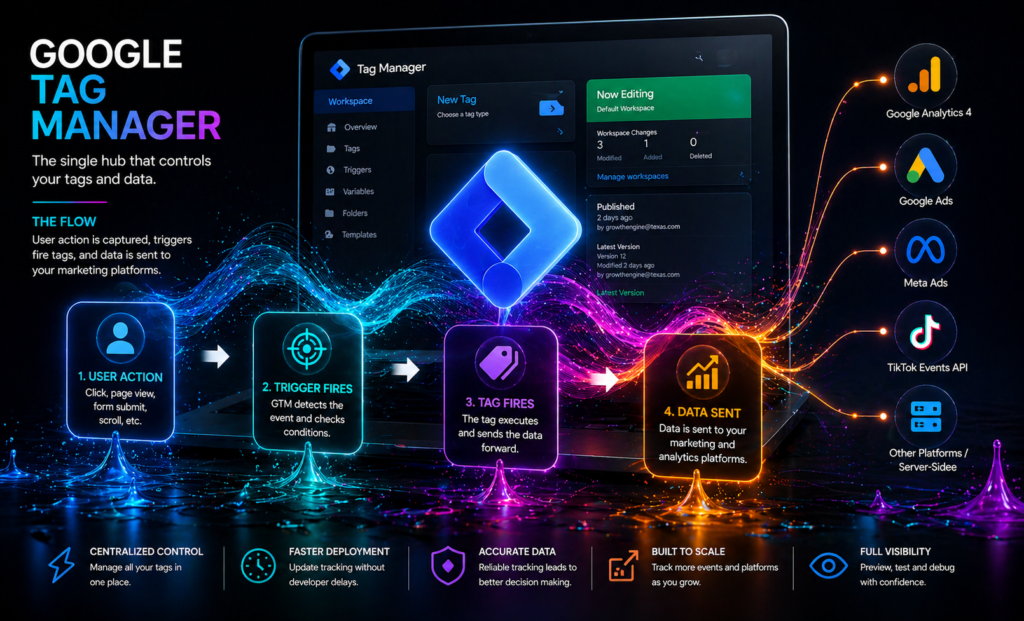
Google Tag Manager acts as the middle layer between your website and your marketing platforms.
Instead of hardcoding scripts across your site, GTM allows you to manage everything in one place.
Think of GTM as the control center for your data.
This gives you flexibility, speed, and most importantly, control over what data is collected and when.
The 3 Core Components You Must Understand
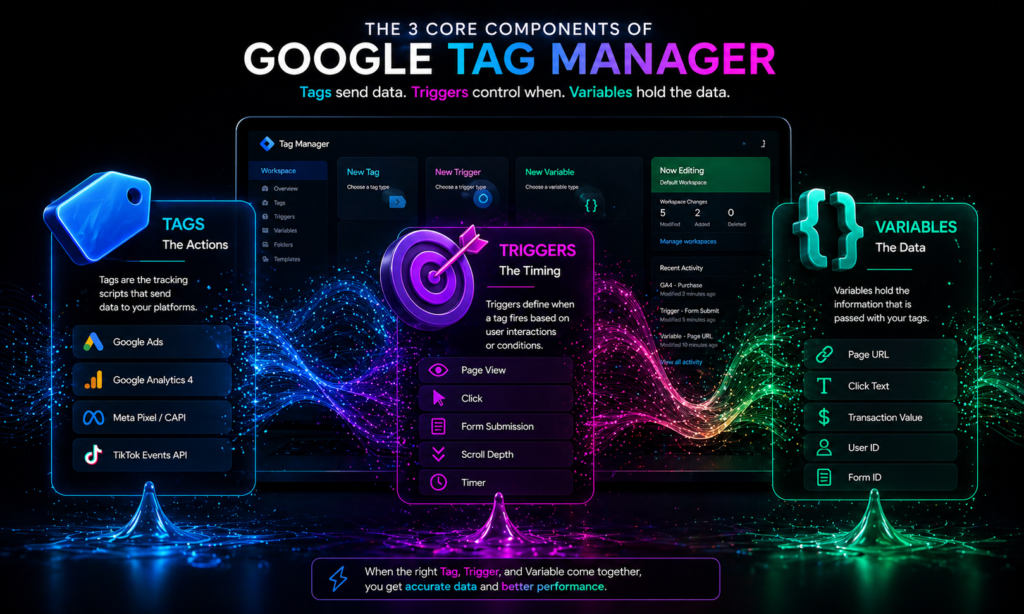
Everything inside GTM is built on three core elements:
Tags
These are the actions. Tags are the scripts that send data to platforms like Google Ads, GA4 or Meta.
Triggers
These define when a tag fires. For example, a page view, button click or form submission.
Variables
These hold the data being passed, such as transaction value, page URL or user actions.
Tags = Action
Triggers = Timing
Variables = Data
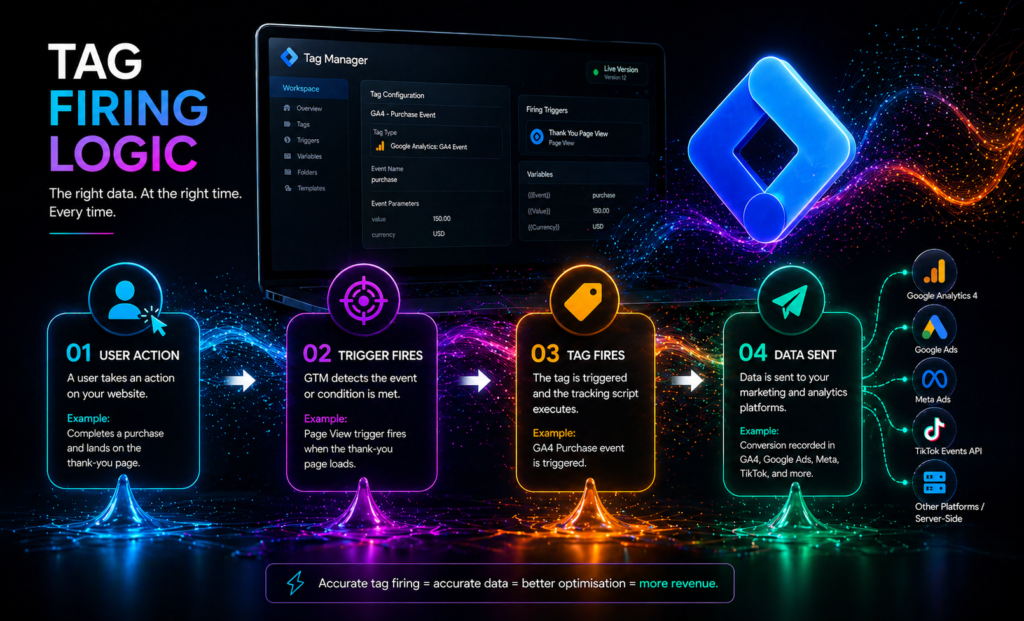
Real-World Example: Conversion Tracking Done Right
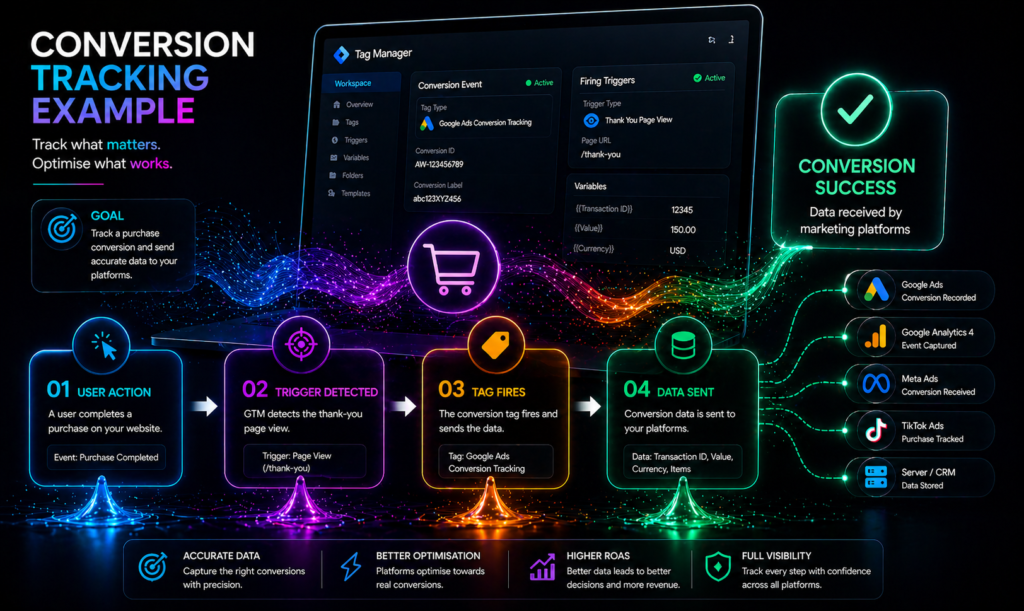
Let’s take a real-world performance example.
Imagine a user completes a key action, like a purchase, lead form or deposit.
With GTM properly set up:
- A trigger detects the success action
- A tag fires the conversion event
- Variables pass the value and details
This allows your platforms to:
- Optimise toward real results
- Improve targeting
- Scale efficiently
Without this setup, you are essentially running campaigns blind.
Why GTM Gives You a Performance Advantage
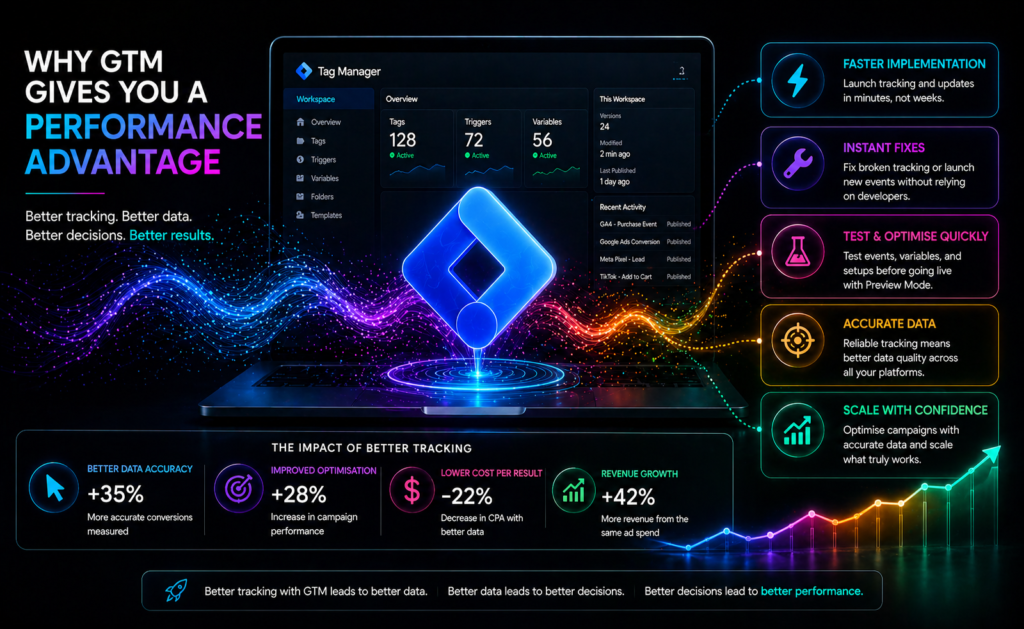
- Faster implementation without developer delays
- Instant fixes to broken tracking
- Ability to test new tracking setups quickly
- Confidence in your data when scaling campaigns
The better your tracking, the better your decisions.
Common Mistakes Most Marketers Make
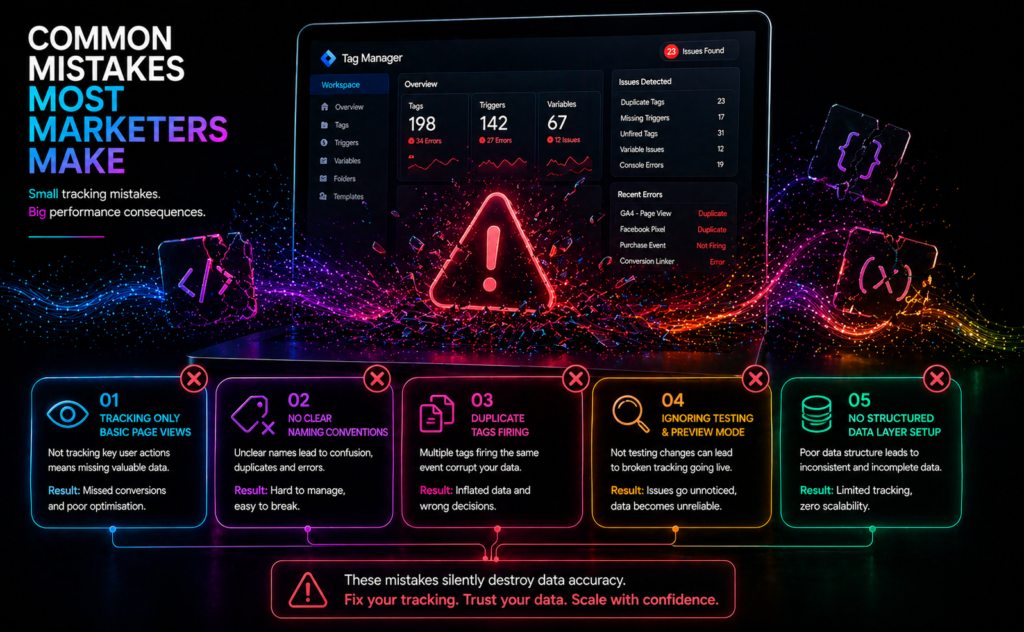
- Tracking only basic page views
- No clear naming conventions
- Duplicate tags firing
- Ignoring testing and preview mode
- No structured data layer setup
These issues quietly destroy data accuracy, and most people do not even realise it.
The Advanced Edge: Where GTM Becomes Powerful
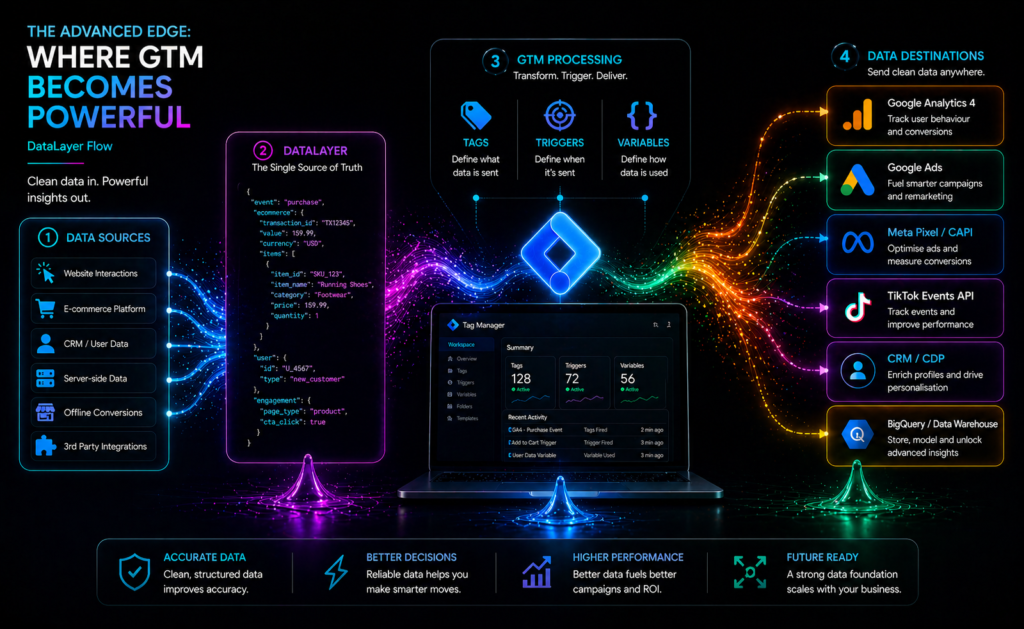
This is where things move from basic tracking to real performance systems.
- Custom events using dataLayer
- Server-side tracking setups
- Integration with analytics and ad platforms
- Connecting conversion data across systems
At this level, GTM becomes more than a tool. It becomes infrastructure.
Final Thought
If your tracking is wrong, your optimisation is wrong.
And if your optimisation is wrong, your budget is just being guessed.
Google Tag Manager is not optional anymore. It is essential for anyone serious about performance marketing.